Unknown's avatar

Things To Click and a Promotion or Two


Hello there!


Happy Friday one and all.  It’s a long weekend this time!  For some of us the weekend brings the last summer barbeque and a camping trip or two, live music or a relaxing day with friends.

This weekend – Three Days Only!  The Alchemists Vessel is having its first Labor Day Sale!  That’s right!   Saturday through Monday, enter the Coupon Code: LDAY10 and received 10% off your total purchase price.  Some special in-shop items include free shipping, like this pendant.

Sterling Silver and Black Onyx Genuine Gemstone Necklace


That’s right Monday is Labor Day!  Yes, it is a Federal Holiday.  Yes, it means that most of us have the day off from our jobs, whatever those may be.  For some it means sales and shopping, for others it is a day for the Honey Do list and household chores.

Labor Day: 11 Facts You Need To Know

After we have had a refreshing weekend, it’s time to head back to work or school.  It is also the beginning of Market Season!  Flea Markets, Holiday Gift Shows, Specialty Booths, they are all a great place to find that unique and must have item.

Treasure Valley Flea Market, September 8th and 9th, 2012.
5610 Chinden Blvd. Garden City, ID
Idaho Expo at The Fair Grounds
Saturday – 9:00 a.m. to 6:00 p.m.
Sunday – 10:00 a.m. to 4:00 p.m.
Admission is $2.00

We hope to see you there.  Booth #28, The Alchemists Vessel.

New Classes in September at Jo-Ann Fabric and Craft Stores with your friendly instructor, me.  Jewelry Basics is always available,  and covers the basics from tools to findings and a completed project to take home.  Learn to make “Pretty in Pearl” earrings in two designs.  New project is an interesting Swaovski Crystal bracelet.   See your local store for details.  

Classes are taught at the Milwaukee location.
1085 Milwaukee
Boise, ID
(208) 323-5373
Call or Sign up for classes in store.  
*Open House Saturday Sept. 8th at this location.

Thank you for stopping by and having a look.  

The Alchemists Vessel would like to wish you a pleasant Labor Day Holiday.


Unknown's avatar

Quick Pictorial Tutorial Thursday


Good Morning!
 
The week is winding down and so am I.  Today I thought it would be fun to look at an easy and relaxing jewelry-making craft, Wire Wrapped Rings. Yes, I said, relaxing. This is actually a really fun and super simple project.  Even the kids can do it!  One of the best things about this project is that it takes just minutes to do.
Wire-Wrapped Rings in Sterling Silver plated Copper jewelry wire

I think every jewelry blogger, designer, maker, or hobbyist, eventually sits down to write about or make one of these simple and pretty little rings.  This includes myself. 

All you need:
Jewelry Wire – *20 or 18 gauge (any type) Colored (anodized) Aluminum works well, too. 
(*I do not recommend 16 gauge or 14 gauge)
Permanent Marker or Lip Balm (or any round object – a “mandrel”)
Pliers – if you like.
*Extra Embellishments (not necessary, but fun to play with).
Button
Glass Seed Beads (Size 6)
NOTE:  Jewelry wire comes in lengths measured in yards, usually between 8 to 10 yards per coil, that’s 24 to 30 feet of wire.  You can make lots, and lots of rings with a single coil.  The Sterling Silver Plated Copper jewelry wire I used for this project is packaged by Darice and available at local craft stores for about $3.99 for 8 yrds.
Simple Tools and Wire
First measure and cut two pieces of wire 8″ long.
Gently fold them in half.
Don’t let the ends cross.
Put them together and place the marker, balm, or other round object ( “mandrel” about the size of your finger), in the fold.  Bend the wires around the marker or balm with your fingers.
Don’t let the ends cross, keep each wire next to each other.
Next, Adjust the wire where you want it.  *Remember it will be a little looser at this stage.  That is OK.  With your fingers, hold the bottom of the wire against the madrel, with your other hand, take the wires between your fingers and twist in a clockwise motion, locking the wires together (like a twist tie).  Keep the wire as tight as possible against the mandrel as you twist.  Twist only once.
Twist the wires once, clockwise.
You may take a pair of pliers or your fingers and bring (pinch) the loops together.
 
Now  continue to twist the wires, one group of two at a time around each other twice or three times.  Stop.  Can you see the “rosette” forming in the center of the ring?  Good.
The Rosette is formed and wires are divided.
Now, divide the wires.  Decide which wires will continue forming the rosette and which to pull away from the center.  Do not cut the wire.  Above the wires closest to the rosette have been left in place, the others have been stretched out and away from the center of the ring.
 
Continuing wrapping around the center wire forming a larger (or smaller) rosette as you choose.
The Rosette is complete, the wrapped wire is now much shorter.
Trim the excess wire from the Rosette.  You may wish to leave a little extra to bend over and tuck under the edges of your ring.  I did not do that in this example.  However this helps to keep the wire from snagging and possibly ruining the ring.
 
Next, and this can be a little tricky.  Remove the ring from the madndrel, choose one side of the ring and begin wrapping the other length of wire around the shank (round part) of the ring.  It helps to bend the wire slightly so it slips into the center of the ring.  Wrap the wire down the shank.  Make sure to wrap both sides.  This will help the ring keep its shape, make it a little smaller in diameter, and adds an interesting design element as well.
 
One side is of the shank wrap is complete here is the other side in progress.
 
Make sure that the wire ends are on top of your ring shank, cut off the excess wire, keeping the ends up and away from your skin so you do not scratch yourself.
 
The complete ring on the marker (mandrel).
You can wear the ring on any finger it will fit on or that you have sized it for.
 
Pretty little bauble
 
Completed ring.
 
 
You can also bead the last twist of the wire around the rosette if you like or you can use a button as a focal point.  As shown in the alternatives below.
 
Black Czech Glass Seed Beads adorn the side of the rosette.
Shell Button Ring
The button ring is made using the same technique.  Once the wire has been placed around the mandrel, side the wire through the thread holes in the button.  Bring the button down as close as you can to the mandrel, and then twist the wires together.  Instead of separating the wires and wrapping them down the shank, use all four to form the rosette in the center of the button, cut off the excess wire and wear for fun or with Kitschy fashions!
 
Reddish-Orange Shell Button with complete rosette
There are many other ways to add to or embellish the ring.  Why not try glass bi-cone beads or a gemstone or maybe even a crystal.  Perhaps a charm or other interesting object, like a gear or tiny vacuum tube could be wrapped as well.  The possibilities are endless.  What might you design?

T.A.V. would like to thank Carrie S. for the use of her camera.

 
Thank you for stopping in and having a look.  We hope you found this tutorial interesting and will try a wire-wrapped ring of your own.
 
The Alchemists Vessel would like to wish you a pleasant Thursday.


Unknown's avatar

Studio Shuffle – What’s Going On At The Workbench


Happy Middle of the Week to you all!
 
After last weeks fun with Cuttlebone Casting,  I took a little break and did something simple.  Sort of.
 
Occasionally I will buy Estate Jewelry in bulk, usually it’s pretty much costume jewelry that is broken or will be taken apart for its bits and pieces.  Every once in a great while I come across something exceptional, a wonderful surprise of promising buried treasure.
 
I failed to take a photo of the piece before I took it apart.  But the thought of blogging about it didn’t occur to me until the piece had been re-worked and finished.  Oops!  Also I have come to find out that the Photo Editor on my computer is having problems, so I have been reduced to attempting to take pictures with the cell-phone’s camera.  Not and easy feat!
 
“Blue Tile” is the up-cycled outcome of the salvaged necklace.  Originally 18″ long, with clusters of glass baubles and several damaged tiles.  It was attractive, but I saw potential for something unique and interesting.
 
I removed the damaged pieces and the clusters of glass beads, cleaned and polished each tile, restoring the mirror finish and high shine.  Using the original jump rings and clasp I re-linked each tile individually, re-creating the necklace.  It now looks like this.
 
Description: A fabulous piece for Egyptian, Southwestern or Turquoise admirers. Occasionally I purchase Estate Sale Jewelry in bulk, and every once in a while something exceptional appears. This absolutely gorgeous necklace is up-cycled from its original 18″ length. Damaged tiles, links, pieces and clustered glass doo-dads were removed, the original parts salvaged and re-created as this fabulous and unique 15-1/2″ necklace.

Would make a wonderful alternative for a December Birthday!

 
Other things going on in the Studio:
 
I made my second ring, and the first one I am willing to put in the shop for sale.  After a lot of practice and several failed attempts I have something that I think I really like!  I need to make more, I am obsessed with the process now.
 
Hot off the anvil
 
Description: Hand forged Sterling Silver and genuine Malachite ring. Size 6 – 6-1/2. Will fit pinky or ring finger.

Would make a wonderful alternative for May Birthdays!

Created with Sterling Silver sizing stock (stamped “Sterling”), sterling silver bezel and sterling silver jewelry solder (for attachments and accent swirls). Genuine Malachite cabochon is 6mm, setting is 7.5mm to 8mm. Sterling silver wire has been used to create the swirl accents on the sides, they are soldered to the sides of the shank. The shank has been soldered at the bottom to keep the double strands together.

All elements of this ring have been crafted by hand, the cabochon stone was purchased through a gemstone supplier and is A grade Malachite.

Detail Photos


Next weekend is also the first Market of the season, we are getting prepared and packed to attend! 
 
 
Thank you for stopping by and having a look.
 
The Alchemists Vessel would like to wish you a pleasant work week.


Unknown's avatar

Six Great Gifts For Giving 8/28/12


Tuesday is here and so are six neat items for giving.  An eclectic collection of items for the home and a vintage piece of jewelry or two!
 
 
Description: This is a hand painted tote bag with Autumn colored flowers. The seasonal red, orange and yellow flowers make this bag a cool Fall accessory. There are bright green and white leaves to compliment the flowers. A pretty silver butterfly charm adds its own sparkle. This is a fun bag that you’ll find yourself going back to again and again.
13.5 in x 13.5 in x 3.5 in
Description:  This is a OOAK hand painted tile trivet with purple and white flowers. It has bright green and white vines swirling around the flowers. This gives it a nice sense of depth and movement. It can be used to hold something hot or just for a decorative accent. It’s a great way to add a splash of color to your kitchen.
 
Description: The graceful movement of a ballerina is perfectly captured in this lovely pin, circa 1950.

It is 2″ long by 1 3/4″ wide .
Non magnetic golden material.
Clasp is a little tight, but works properly.
There is some slight wear to the finish at the tip of the toes and very top of the head. Noticable only very close up in proper light.

Overall very good vintage/used condition.
Description: 1960’s KENNETH JAY LANE KJL STAR BROOCH PENDANT LARGE

Kenneth Jay Lane Signed (K.J.L.) Brooch / Pin Pendant from the 1960’s

This rare Kenneth Jay Lane Brooch/Pendant is a stunning statement piece. It is in excellent condition, and is signed K.J.L. This is an early Lane mark, from the 1960’s.
The center of the star is nicely cut pave rhinestones, and is lifted a bit from the frame, giving dimension. The additional smaller points of the star are just at bottom of the frame level and also pave rhinestones. The piece is framed in a gold tone. Pin closure operates properly, and there is a hook to enable use as a pendant as well.

A truly beautiful piece which will undoubtedly continue to increase in value.


Description:  This professionally printed 8 x 10 canvas giclee print of two giraffes is a reproduction of my original paper sculpture collage titled “Under the Sun”. Giclee prints are produced from a large format, high-resolution ink-jet printer and printed with archival inks.This jungle animal print would look great in a baby’s nursery or a child’s room.
It would also make a unique baby shower gift.


Description:  This professionally printed 8 x 10 canvas giclee print of two zebras is a reproduction of my original paper sculpture collage. The original was created by handpainting watercolor paper using acrylic paint and then cutting, bending and layering the paper to create depth.


Giclee prints are produced from a large format, high-resolution ink-jet printer and printed with archival inks.

A mama zebra gently nuzzles her baby under a brilliant orange sun in “Eskimo Kiss”.

This print would look great with “Dandy Lions” or “Giraffes” hanging in a jungle themed nursery or playroom.

Thank you for stopping in and having a look.
The Alchemists Vessel would like to wish you a pleasant day.


Unknown's avatar

New Shop Stuff


Hello,
 
Welcome to the beginning of the week.  The Dog Days of Summer are winding down and the air carries a little chill this morning,  and the colors of the season are soon to change as well.
 
The Flea Market is coming up September 8th, and 9th, that’s next weekend and we have been busy preparing and polishing all the goodies for the show!
 
Which means Labor Day is right around the corner, like next Monday, and Halloween is close behind, get those custom orders in to be sure you get your treats in time!
 
Description:  Natural Jet and Carved Carnelian beads grace this 18″ long One-Of-A-Kind Halloween themed necklace. Center Piece is 1″ wide with three Sterling Silver Charms , Pumpkin and two Bats. Sold as a set the Earrings are adorned with Jet beads on Sterling Silver headpins and Ear wires. Finished with a Sterling Silver Gothics Hook Clasp at the side (Very Fashionable)
Detail Photo
Here you can see the Sterling Silver Pumpkin and Bat charms detail.  The hand carved carnelian has a zigzag pattern that catches the light nicely.
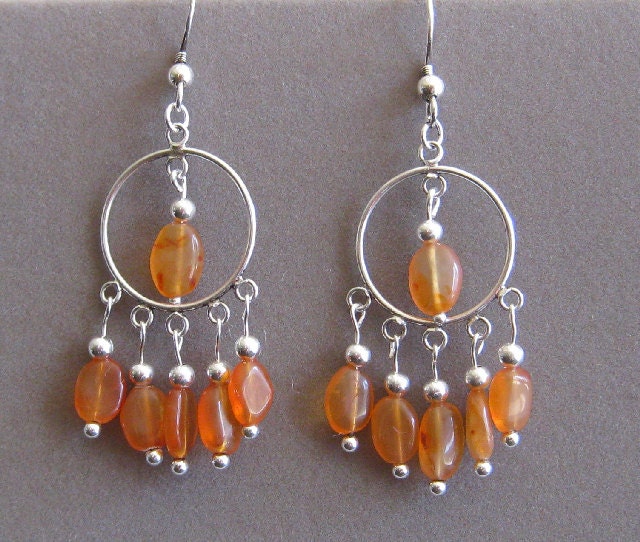
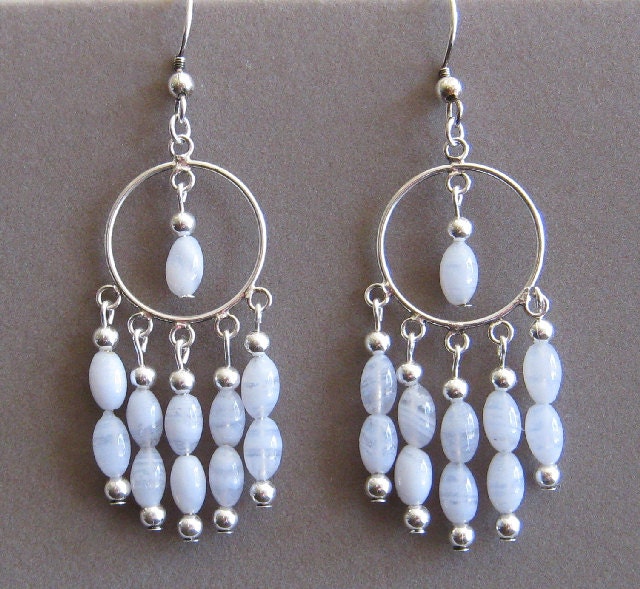
We have also re-listed one of our most popular designs for earrings, Sterling Silver Hoops with Gemstones.  Available in a variety of stones.  These are limited to what is currently in stock and then they are gone forever!
 
Description: These are Blue Lace Agate gemstone beads in an oval shape.  Currently available in the listing are also Garnet, Malachite, Carnelian, and Turquoise.
 
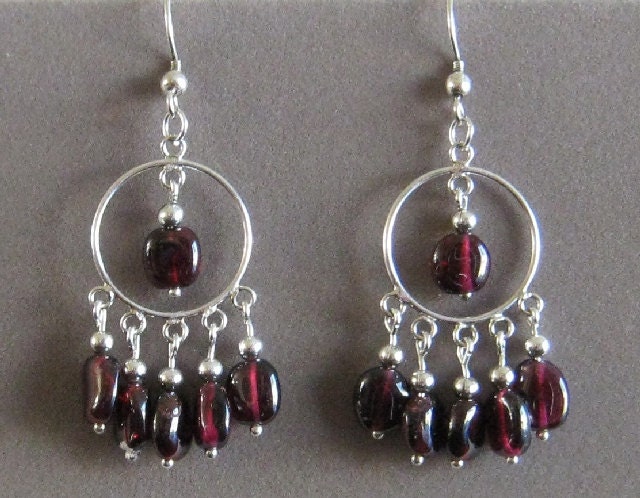
Listing Description: Sterling Silver Six Drop Hoop Earrings with Natural Grade A Semi-precious Gemstones – available in a variety of gem and birthstones. Dressy to casual, great for gifts, makes a pretty tailored pair for that office attire, fabulous for Boho, Hipster and Rocker style too!

These are hand assembled with hand cut head pins, sterling silver beads, and full soldered Round six Drop Hoop Findings with Sterling Silver Ear wires. Beads are genuine garnet, Flat Oval Coin shaped beads. Also available in round-shape beads, and select stones are available in long-oval-shapes.

Sensitive to Metals? Hypo-Allergenic / Stainless Steel Ear Wires can be substituted at no additional cost. Please specify this preference when ordering.

Customization: These earrings can be made to order with a specific stone, and The Alchemists Vessel will set up a special item just for you. Please convo via this listing with your questions or preference, or for a complete list of stones currently available and in stock.

Arrives boxed, ready for gift giving.

Samples Shown: Garnet, Carnelian, Turquoise (4mm Round Beads), Blue Lace Agate,and Malachite. All gemstones are genuine and left in their natural state, only cutting and polishing has been done. The Turquoise is “Stabilized” or “Resin Polished”, a clear resin material has been used in the polishing process to stabilize and lend the bead additional strength and enhance the color and surface shine of the bead. Turquoise is a soft stone and easily cracked or broken.

Samples Shown Below
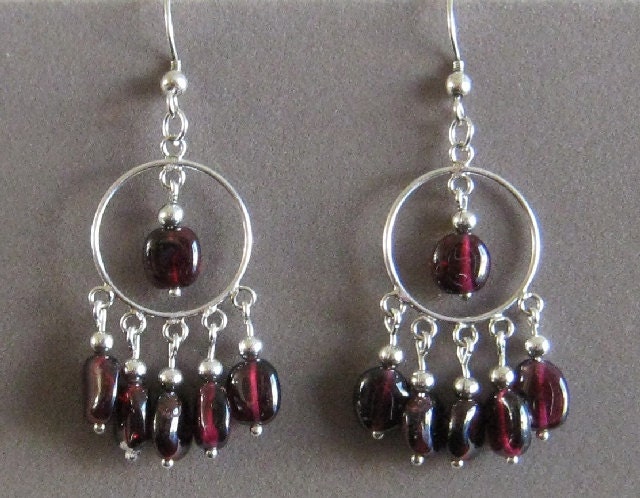
Sterling Silver and Genuine Garnet Hoop Earrings
zoom
Sterling Silver and Genuine Garnet Hoop Earrings Sterling Silver and Genuine Garnet Hoop Earrings Sterling Silver and Genuine Garnet Hoop Earrings Sterling Silver and Genuine Garnet Hoop Earrings Sterling Silver and Genuine Garnet Hoop Earrings
From Top, left to right: Garnet, Carnelian, Turquoise, Blue Lace Agate, and Malachite.
 
 
Thank you for stopping in and having a look.
 

The Alchemists Vessel would like to wish you a pleasant work week!


Unknown's avatar

Cuttlebone Casting Part III – Casting The Piece


Hello,

Please note, due to technical difficulties some of the photos for this tutorial are not shown (photo error), this post will be updated once the photo upload decides to cooperate.  We apologize for any inconvenience this may cause and are working to rectify the situation.

This is the final stage in casting a piece of jewelry with a cuttlebone mold.  If you have not been following along or have just discovered this series, please refer to the previous posts for an overview.
 

Cuttlebone Casting – Part II Model and Mold Preparation

PART III Casting the project.
TOOLS:
Tin Alloy Soldering Wire (4 tubes, 20 feet)
Mini-Torch
Prepared Cuttlebone Mold
Vice Grip or Prop
Safety Gear
Goggles / Glasses
Gloves, leather shoe strings (something to wrap the spoon handle) 

NOTE:  The sample casting shown used 2 to 2-1/2 tubes of Tin Alloy Solder, your project may require more or less depending on size of the model and depth of the impression.

SAFETY FIRST!  This lesson consists of playing with fire, and I mean literally.  Temperatures reach 400 degrees and possibly higher!  Be aware of your surroundings and your work area!  Remove any and all distractions and make sure you have an uninterrupted block of time in which to work.  Although this portion of the process is fairly quick, you must pay attention to what you are doing!  Turn off your cell-phone, send the kids outside to play, give the hubby a “Honey-Do” list and feed the dog; you must be and remain focused!
Last time we made a wax model and a mold from simple and easy to obtain materials.  Today we are going to complete the process and show the steps for actually casting the piece.  The step-by-step process for creating a mold may be read in CuttleboneCasting Part II – Model and Mold Preparation.
The cuttlebone mold is now ready for molten metal.  Cuttlebones are naturally heat resistant.  This means that they can withstand high heat without distorting in shape, and make wonderful molds for just that reason.  They are also a completely natural tool with no added chemicals and won’t harm the environment.  Eco-friendly jewelry creation, that’s a plus!
PRE-CASTING PREPARATIONS:
Prepare your work area.  Make sure it is free of anything flammable and fluttery that might catch fire or drift into the molten metal.  Place your mold in the Vice Grip or other object you have chosen to keep it steady and upright.  Get your spoon (or whatever you’re going to use to melt the metal in), torch, and tin alloy lined up, ready to go, and easily accessed! 
**TIP:  Trim the tin alloy coils into smaller pieces; this will make melting and adding it to the already melted material much easier.
(Photo error)
NOTE:  Unlike other casting processes that use high-speed centrifuges or kiln (oven) burn out cycles (Lost Wax Casting) to distribute the material to the mold, all that is working here is gravity!  Pouring the molten metal into the mold is like filling a glass with sand, the material will be layered as you pour it into the mold.

Here I have the cuttlebone mold in a prop to keep it upright and steady as material is poured.  Closed with Rubber bands and waiting for metal to be melted and poured.

MELT THE METAL / FILL THE MOLD:
*The Spoon will reach temperatures of up to 400 degrees (the melting point of the tin alloy is 374-degrees), USE PROTECTIVE MEASURES!  Leather gloves or wrap the end with leather shoestrings to keep the heat away form your hands and fingers.
Begin by adding a small amount of the Tin Alloy to the spoon.  Cut bits off the coil first to make this easier.  Let it sit in the bowl of the spoon.  Do not try to melt the whole coil all at once.   Using a mini-torch, hold the spoon just above the flame and melt the metal in the spoon, continue to add bits of metal until the spoon is full.
The flame has not been turned on for these pictures, that would be hazardous to my heath and the I’d burn the house down.  These are to show the spoon’s position it should be held up and away from the nozzle of your torch and the flame allowed to heat the bowl of the spoon from underneath.
Because the soldering material is a tin / rosin core alloy, you will see the rosin left behind in the spoon.  That is the brown discoloration you see.  Rosin comes from trees and is a brittle solid form of resin, it is used as a flux in some soldering materials to help the metal melt and flow at an even rate.  This discoloration will not appear on your piece, this is left behind after the melting process.
NOTE:  The molten metal will pool in the bowl of the spoon.  Adding pieces of material closer to the pool will help it to melt and incorporate into the ever growing puddle of metal.  It will slide around in the spoon hold the spoon steady while melting is in process. 
(Photo error)
Continue to add pieces of the Tin Alloy until the spoon is full.
Carefully pour the contents of the spoon into the Sprue Hole and down the Sprue Channel.
Repeat the melting and pouring process until your mold is full, you will have to look through the Sprue Hole and do a little guessing here to be sure that the material has filled the mold (impression) completely.  You DO NOT want to fill the Vent Gates or Sprue Channel, just enough metal to fill the mold of the Cross.
Instant Gratification…. Well almost.  After the mold is full, wait a full ten to fifteen minutes for the metal to solidify and harden.  The mold will also be cooling down during this time, making it a little easier to handle.
Here you can see the burn mark on the top of mold, where the spoon touched the surface of the cuttlebone.  Here the cuttlebone sits in its prop cooling down while the metal is solidifying.
Once time is up, carefully remove the binding from the outside of the mold, unwind the wire, slip off the rubber bands (whatever was used) gently, keeping the mold closed as you do this.  If you used Duct Tape (and I told you not to) you will have to cut it away with a razor-blade where the two halves of the mold meet and split the mold open like a book.
(Photo error)
Well looky there!  You have a metal pendant!  TAH-DAH!
(Photo error)
The tin alloy is soft enough that you can drill a hole in the top of the cross using a drill bit and your hand for a bail to be glued (soldered) into place.
FINAL FINISHING:
To complete my pendant, I will seat the simulated Garnet into the center hole of the Cross.  Using a brass rod that I have ground to a 45-deegree angle at one end, I will finish the pilot hole for the gem and seat it in to place.  Using a craft knife or razor blade, I will then create PRONGS by scraping some of the metal from the Cross up and over the gemstone in four evenly spaced places around the stone’s setting.
Although this will leave dents in the exterior of the Cross surface, it will help secure the stone into place.
After the gemstone setting is complete I will use a Polishing Cloth (these have chemicals embedded in the material) and gently rub the surface of the piece, polishing it and giving a little shine.
It is now ready to be displayed or worn on chain or lanyard.
Thank you so much for stopping by and having a look, and if you have followed the whole series, thank you for sticking with us.  We hope you have enjoyed this brief look in to one of the many casting processes available and used for jewelry-making.
The Alchemists Vessel would  like to wish you a pleasant day.
**Want something like this, but don’t want to do it yourself?  Custom work is available.  All custom molding projects begin at $50.00 this includes Design materials and Mock Up of your custom piece before casting in the material of your choice!  Precious Metals are available for this process. Please feel free to return for the updated post, once I get the photos to cooperate! 


Unknown's avatar

Thursday Feature – Etsy Tips


Greetings,
 
This morning I find myself sans an artist to feature.  So instead of featuring a single artist, I thought it might be interesting to give some tips, tricks and things I have learned about Etsy, and how to use the site.
 
What is Etsy?
 
Many people have never heard of Etsy.  To quote a friend, “Etsy is the World’s garage sale“.  Actually it is kind of like the World’s garage sale, there are thousands of shops to peruse and all of it is handmade, unless you are searching for supplies for your handmade goodies.  Buyer accounts are free to sign up for.
 
Shop Presence, what is it, how do you do it?
 
Shop Presence is a buzz word for really nothing at all.  The idea behind it is that your shop stands out or is more present (accessible) than another.  What does this entail?  Building your store front, banner, shop items, and even your avatar count to draw people into your shop. Yes, the shop name may be important as well.
 
Shop Name:  “The Alchemists Vessel” doesn’t give you any idea about what I do, however the name does give some idea of what you might find at my shop.  Gemstones, crystals, pendulums, unique items of unknown origin.   Think about the name and what it says about your shop.  “Kay’s Jeweler‘s” leaves nothing to guess at, you know that Kay sells Jewelry.
As a seller / vendor you have about seven (7) seconds to grab and hold a shoppers attention before they click through to another shop or site.  How can you grab and hold on to that customer’s / shopper’s attention?  With your store front, of course. 
 
Make it interesting, colorful and informative.  The first thing a customer should notice is what you’re offering!  Jewelry, Paintings, Knitted items, whatever, make sure that the customer knows they are in the right place to find what they are looking for.
 
The Banner:  The banner is just that, a big Title Block image at the top of the page.  This is mine.
It reads:  “Decorating extraordinary people with extraordinary jewelry”. (A bit hard to read at this size, I know).
 
This banner tells you what I do, I offer “extraordinary jewelry”, and of course the person shopping certainly feels that they are extraordinary anyway.
 
Your Shop banner should give some indication of what you do, sell or what business you are venturing. (Photography, knitting, painting, sculpting, whatever).
This is the old banner.  Pictures of beads give you a “visual clue” as to what you may find at the shop, and “Extraordinary Ornamentation” is the confirmation.
 

Avatar:  Your avatar is the picture that represents you on the site.  Many people use a portion of their banner, an image or a picture of themselves.  I have found that a portrait (picture of the seller) works much better than an image or other graphic. People tend to trust a face more than an icon.  You all know what I look like, no sense in posting my own.

Store Front / Items:  There are several schools of thought on this, I will share a couple.
 
A “full store front”.  Some shops do not have enough merchandise to fill up the allotted 24 item boxes on the front page of the shop.  The more you add the more pages will automatically be created.  Apparently it is important to keep at least 24 items in the shop, there is no explanation as to why.  It does however look better to have a full front page.
 
Featured Items: These are items chosen from your shop that you wish to feature on your shops front or home page.  They are underneath the banner and on top of the 24 items on your front page.  These items should reflect the BEST you have to offer.  If possible be sure that the featured items are not also listed on the front page of the shop.
 
Variety:  I know it is within our nature to organize like things with like things.  However piling all your earrings on the front page when you also sell bracelets or necklaces isn’t going to get those other things noticed or sold!  Diversify the listings, try to look at the page as a catalog of all your merchandise.  A customer / shopper can see that you also carry bracelets and necklaces as well as earrings.   Try to group things vertically and horizontally, this goes with that which could be paired with the other thing.
 
Currently my front page does not reflect this and I need to do a little re-arranging.
 
Pictures:  Yes, they are so important.  Clear, focused photos are best.  
Try to take your photos in natural light.  
Do not clutter up the background with stuff, you want people to look at the item not what’s in the background.
Use a neutral background, like a gray color, that will not interfere or compete with your item.
Try to take a detail photo, a close up tight shot that shows the pattern, texture, stitch or accent up close.
 
Remember: Shopping is a tactile experience, people want to pick up the item, look at it, scrutinize it before spending their hard-earned pennies on something!  Try to take pictures that will give the on-line shopper the sense that they have viewed it from all possible angles and given it the full attention it deserves before buying.
 
I hope some of this has helped.  Good luck fellow vendors!
 
Thank you for stopping by and having a look.
 

The Alchemists Vessel would like to wish you a pleasant Thursday.


Unknown's avatar

Cuttlebone Casting Part II – Model and Mold Preparation

Good Morning,
 
Wednesday’s are devoted to what’s happening in the studio here at The Alchemists Vessel, and this morning is Part II of the three part series, Cuttlebone Casting.
 
Monday we discussed materials and the very basics of beginning to model and mold the pendant.  Today we are going to continue the project with making the model and creating the mold itself.
 
If you would like to follow along, I recommend a quick review of Monday’s post, Cuttlebone Casting Part I – Materials and Model Making.
TOOLS:
Pencil
Paper
Pin or Sharp Pointy Object
Modeling (Jeweler’s) Wax
Flat File
Jeweler’s Saw
Lighter Fluid
Soft Cloth
Brass Rods
Unsharpened Pencil

Prepared Cuttlebone halves

Last time the design of the piece was decided upon, sketched and cut out.  The sample project shown throughout the instruction will be  simple Cross shape.

This is about 1-1/2″ tall x 1-1/4″ wide.  Sketched in pencil (then traced with ink for a clearer photo), cut out of the paper, this will be the Paper Template from which to trace or “scribe” the design on to the wax block.

PREPARE THE MODEL

Cut out and place your Paper Template on top of the modeling wax and with a pin or other sharp object draw or “scribe” your design into the wax.  Trace the template.  Below is a T-pin, which I use to scribe the design in to the wax.
Note: You can see that the template is a little too long for the wax, you may adjust your design to fit with in the wax area before your trace the design.
Next with a Jeweler’s Saw and a Spiral saw blade (these cut modeling wax best, and straight blades work just fine, too) cut out your model.

Here is the beginning of the wax model.  Using a straight saw blade the block has been cut along the scribed lines in the wax.  Once completely cut out the model will be ready for final preparations.

Once your model is cut out, use a wax file to smooth and true the edges up, keeping them straight and even.  They make specific files for wax, if one is not available a flat jewelers / craft file will work as well.
Using a tiny bit of lighter fluid and a soft cloth, smooth out the surface, corners, and sides of the model.  This will remove any imperfections, nicks and scratches, and smooth the surface for a better impression.  Remember every imperfection will transfer to the finished product.  Be careful, over working the wax will distort or destroy any detail you may have carved into the model.
I have drilled tiny pilot holes in my design, the center hole will house the gemstone, and the others are to keep the design consistent.

NOTE:  I failed to take a picture prior to completing the next steps.  What you see here, is the final model, after it has been pressed into the cuttlebone halves.  The white material is dust from the bone.   Also, I dropped it, as I mentioned the wax is very brittle and I managed to break the arm of the Cross on one side.  However this happened after creating the mold impression!

Whew!  Almost there!
MAKE THAT MOLD
Now the fun starts!  Using one side of your cuttlebone, press your model into the flat surface of the bone.  The bone is soft, use gentle even pressure.  Next place the other half of the cuttlebone on top of the wax model and other half of the bone-mold and press the two sides together.  GENTLY!  If you press too hard the cuttlebone will break and another one will have to be prepared before continuing.  The wax model is now embedded in the cuttlebone.  It does take some pressure, and you can hear the model sinking into the surface of the cuttlebone.  The halves do need to touch, but press the wax into them enough for a well-defined impression.
With a pencil, mark several places on the outside of the bone so you can align the halves later.  This is important, the sides of the mold must match up for the inside to cast properly.
Remove the model.  The impression will be left behind.  This model may be used again to make another mold.
 
Here you can see the impression the wax model has made in the bone, along with the natural striated patterns of the bone itself, they are distorted by the the impression of the cross.  (The other side of the cuttlebone looks just like this).

If desired, very, very carefully sand the impression for better definition.  Do not overwork the area or you can distort the impression.

ADD SPRUE CHANNELS AND VENT GATES
Choosing one side of the mold, lay it flat and using the end of a pencil (not sharpened) create a SPRUE CHANNEL by gently pressing the pencil into the bone, just above and at the edge of the impression.  What’s a sprue channel?  It is a channel that allows the material you’re pouring to enter the mold for casting.  Make sure that this just touches the edge or of your model impression, but not so much to distort your design.  (Simon didn’t say to remove the pencil).
Next using brass rods or something with a smaller diameter than the pencil create VENT GATES.  What’s a vent gate?  It is a channel that will allow air to escape the mold during the casting process.  Just like you did with the pencil, using two (2) Brass rods (or tool) lay them just at the end and edge of the arms of the Cross.  These should also just touch the edge of the impression.  With the pencil and then the rods in place, place the second half of your mold over the pencil and rods and press down, keeping in mind to align the pencil marks on the outside of the cuttlebone.  The channels must be created in both sides of the mold.  Take the halves apart, remove the pencil and rods.
Are you still with me?  Still want to make a piece of jewelry?   Alrighty then!  Here we go!
Now match up the halves with the lines you made on the outside.  Find the Sprue Channel. Very carefully mark the top of the mold (both sides), on either side of the Sprue Channel.  This is where you will cut the SPRUE HOLE.  What’s a sprue hole?  It is a larger opening in the mold, which allows you to pour material into the Sprue Channel and into the mold.  This makes it easier to pour the material from whatever you have melted your material in, into the mold itself.  If you try to aim for the Sprue Channel you will wind up with material on the outside of the mold and possibly severe burns.  Molten Metal is HOT HOT HOT!  This project only gets up to about 400 degrees, but that can still do some serious damage!  Be careful.
Here you can see the Vent Gates, Sprue Hole, Sprue Channel, and the pencil marks I made on the outside of the bone to align the pieces.
Now align the Mold again.  Using Mold Wire, Rubber bands, or other type of binding (I do not recommend Duct Tape or other adhesive strips or bindings), match up the halves and secure (close) the mold.
The photo above is the closed mold, with Rubber band binding.
You just made a mold.  COOL!

WHEW!

Set the mold aside, some place safe and dry.

The preparations are now done and the mold is ready to begin casting the piece.

Take a break, have a little sit down and enjoy some tea, coffee, a beverage, or snack of your choice!  You’ve earned it!

Next time.  Part III – Casting the piece. 

Thank you for stopping by and having a look.

The Alchemists Vessel would like to wish you a pleasant Wednesday.

Unknown's avatar

Three Gifts and Treasuries!


Happy Tuesday,
 
This morning I am pleased to share with you a new shop on Etsy, and just in time for Back-To-School.  These super cute tote bags are great for Gym, Quick Shopping Trips, Extra Stuff.  Have a look hand made and very pretty.
 
 
Description: This is a multi use storage tote with two straps. It is hand painted with purple and white morning glories and lush green leaves and vines. There are black factory stamped butterflies on the tote as well. It is perfect for storing all sorts of things. It’s a great place to keep your books or your yarn and craft supplies. It would be a great catch all to leave by the stairs to fill with things you need to bring up. In the office you can use it for files or folders. It would look nice in a guest room filled with linens. It’s a storage solution that’s too pretty to hide.This basket came with the butterflies factory stamped. I painted the flowers with acrylic paint mixed with textile medium. Both sides are painted and there is a single flower painted on the back. There is also a factory added tag that you can label if you want.
8 in x 14 in x 6.5 in

Packaged with lots of care and love and will ship 1-2 days after payment is received.
Great effort has gone into accurately describing and photographing products, but please note color representation alters depending on individual screen settings.

Description: This is a OOAK hand painted distressed black messenger bag with bright burgundy and white flowers. It also has a small silver butterfly charm for some extra sparkle. There is a small zippered compartment that would be perfect for keys or money. This is a versatile bag that can be used to carry anything. Its bold beautiful colors make it a unique fashion accessory that you will find yourself coming back to again and again.

I used acrylic paint mixed with a textile medium. It was air cured for 48 hours and then I heat set the paint to ensure longevity. The centers of the flowers are embellished with hand sewn seed beads. I added a butterfly charm to make it unique.
13.75 in x 14 in

If it should need cleaning it can be hand washed and air dried.
Packaged with lots of care and love and will ship 1-2 days after payment is received.
Great effort has gone into accurately describing and photographing products, but please note color representation alters depending on individual screen settings.

Description:  This is a hand painted denim tote bag with a smiling green book worm sitting on a blue book. The worm has blue plastic eyes that move when the bag does. There’s a red ribbon bookmark for a dimensional look. What a cool back to school bag. Or a bag to carry your library books, or anything else. No matter what your mood (relaxed, playful, thoughtful) this bag is a versatile accessory that you’ll keep coming back to. It’s also a great way to add a touch of color and fun to your wardrobe.

I used acrylic paint mixed with a textile medium. It was air cured for 48 hours and then I heat set the paint to ensure longevity. I added a blue googly eyes and a red ribbon to make it truly unique.
13.5 in x 13.5 in x 3.5 in

If it should need cleaning it can be hand washed and air dried.
Packaged with lots of care and love and will ship 1-2 days after payment is received.
Great effort has gone into accurately describing and photographing products, but please note color representation alters depending on individual screen settings.

Treasuries:
What is a Treasury?  It is a collection of sixteen items (sometimes less) taken from different stores on Etsy.  They are complied by Buyers / Sellers and usually consist of a common or main theme.
May treasuries focus on a color, a Season, a particular item or a Holiday.  The one below is “Curated” or created by me.  Although the items are not a click-able link from the blog, you may follow the link to the Treasury itself and have a look.  Etsy has lots and lots, and did I say lots of Treasuries.  Why not try giving one a perusal the next time your shopping.
 

To find a Treasury to your liking try the many lists and themes on Etsy by clicking HERE.


Unknown's avatar

Cuttlebone Casting Part I – Materials and Model Making


Good Morning,
 
Monday is here bright, and still smoky from all the fires in the surrounding states.
 
Today and throughout the next couple of  days and weeks we will take a look at a method of casting a piece of jewelry from easily obtained materials.  No special equipment is required for this project, although you will need a heat source that can reach temperatures of up to and over 400-degrees.
The materials are easily obtained and there is quite a bit of preparation required.  Part I includes materials, and preparing the mold for the model.  We will also discuss designing and making the model briefly, and it will be covered in full in Part II.  I emphasize DO NOT TRY THIS AT HOME!  I did, but that doesn’t mean you should!
Let’s begin.
For this project the following materials and tools are required:
A Cuttlebone
Jeweler’s Saw
Jeweler’s Modeling Wax (Green)
Mini-Torch (Butane)
Gloves (Leather workman’s gloves)
Pencil
Brass Rods
320 to 600 Grit Sandpaper
File (Small Rasp / Crafting File)
Tin Soldering Material (Lead-Free Tin Alloy) 4 tubes (20 feet)
Paper
Pin
Small Vice Grip / Prop (Optional, but really should find something)
3mm Simulated Garnet Faceted “gemstone”. (Optional)
Rubber bands  or Molding Wire
Gloves or Leather Shoe Strings (Leather workman’s glove is best)
Safety Glasses or Goggles
Painter’s Mask  (Respirator – Paper Surgical Mask)
Lighter Fluid
Soft Cloth or Paper towel.
This is a cuttlebone.  It comes from a cuttlefish, very much like a squid or octopus.  You can find these at your local Pet Stores and stores that carry pet supplies.  They are inexpensive, and a little difficult to work with as they are very brittle and break very easily.  (These provide essential nutrients for your feathered pal!)  They do come in different sizes and the bigger the better.
Cuttlebones are naturally heat resistant.  This means that they can withstand high heat without distorting in shape, and make wonderful molds for just that reason.  They are also a completely natural tool with no added chemicals and won’t harm the environment.  Eco-friendly jewelry creation, that’s a plus!
PREPARE THE CUTTLEBONE:
First, remove the metal bar that allows you to attach it to a cage.  Using a jewelers saw cut the cuttlebone in half. 
 
 
Using 320 to 600 grit Sandpaper, sand the flat sides of the halves as smooth as possible.  Remember any imperfection will transfer to the final piece.  Since there are natural patterns in the bone itself, it is almost impossible to get a perfectly smooth surface.  This is a great process for rustic or primitive-look pieces that you wish to create.  When sanding it is a good idea to do so on a piece of paper or over an area that can be cleaned easily.  The bone dust is very fine and will get into everything.  You may wish to wear a painters mask when sanding the cuttlebone halves.

These are very small and get smaller with sawing and sanding.  Choose two sides that you have sanded and match them up, by laying one half on top of the other. This looks pretty good.  Set these aside someplace safe.  Do not drop them, or you will have to begin again.  These are very brittle and break easily.  Gentle pressure is all that is required.  Remember you’re making jewelry not mining for ore!  Death Grips will damage and in some cases destroy your mold and all your hard work.
You can see the natural pattern of the bone in the cross-cut section.  The flat side of the bone has been sanded flat, and halves placed on on top of the other, the “join” is smooth and the pieces sit evenly.  
 
The model you design will fit within the flat area of the bone, and should not extend past the married surfaces.
The cuttlebone is now ready to be used. 
DESIGN THE PENDANT (PIECE)

Next, with a piece of paper and a pencil sketch out your design keeping it with in the realm of size to fit your cuttlebone!  This very simple Cross pattern is easy to do; the lines are sharp and easily cut to the proper form.  Remember the more detailed or pointed your object is the harder it will be to cut.  Simple is best for this process.

This was drawn with a pencil and a ruler, and cut out of the sheet of paper.  I have traced it in black ink for a clearer photo.  This is small, about 1-1/2″ high x 1-1/4″ wide.
Set this aside as well, for now.
NOTE:  It is important to make sure your design, fits “inside” the cuttlebone, and does not stretch out beyond the edges of the bone.  The sketch should also fit the dimensions of the wax.  Here I have placed the design on top of the wax to trace or “scribe” the pattern in to the wax to be cut out.
The bottom of the cross is just a tad too long for the wax.  I will trim off the excess or trace around the paper template and stop at the bottom edge of the wax block.  I will also have to change the placement of the circles (these will be holes drilled into the surface of the wax)

After transferring your image to the wax use a Jeweler’s Saw and cut out your image from the wax.

After the shape has been cut out use a Wax File or small Flat File to true up the sides and edges of your design.

These instructions for the model will be repeated in Cuttlebone Casting PART II. Now that the cuttlebone has been prepared and you have a design, let’s make sure those tools and equipment are together.  Double check that Check List!

TOOL CHECK LIST
 
In no particular order:
 
Jeweler’s Wax – Green (aka: Modeling Wax)
I know it looks black, it isn’t, it is a dark green color.  Jeweler’s or Modeling Wax comes in a variety of colors and hardness.  This will work just fine.  Although it is a bit brittle so be careful and gentle when working with it.
Brass Rods
These rods are just shy of 3mm in circumference.  They will be used to create “VENT GATES” and then ground down for sculpting, shaping, carving and drilling tools.
 
Tin Alloy Soldering Material
This is 99.3% Tin, 0.7% Copper.  If the coil was unwound it would stretch to 5′ (Feet) in length.  The coil will be cut into pieces and melted during the final stage of the casting project.
 
3mm Simulated Garnet “Gemstones”
These are faceted simulated stones, I do not know what material they are made out of, but I would guess a heat resistant resign or plastic material, they are not glass.  One of these stones will be set or seated into the final piece.
 
Mini-Torch
This Micro-Torch or Mini Torch uses Butane gas (lighter fuel) and works well for melting or soldering things.
Jeweler’s Saw
This looks very much like a Hack or Coping Saw, Cheese Slicer maybe… This is a small hand-held tool, the blades are very fine and thin.  This will be used to cut your model out of the wax block.
 
Wednesday, PART II – Model and Mold Preparation. 
 
Thank you for stopping in and having a look.
 
The Alchemists Vessel would like to wish you a pleasant work week.